
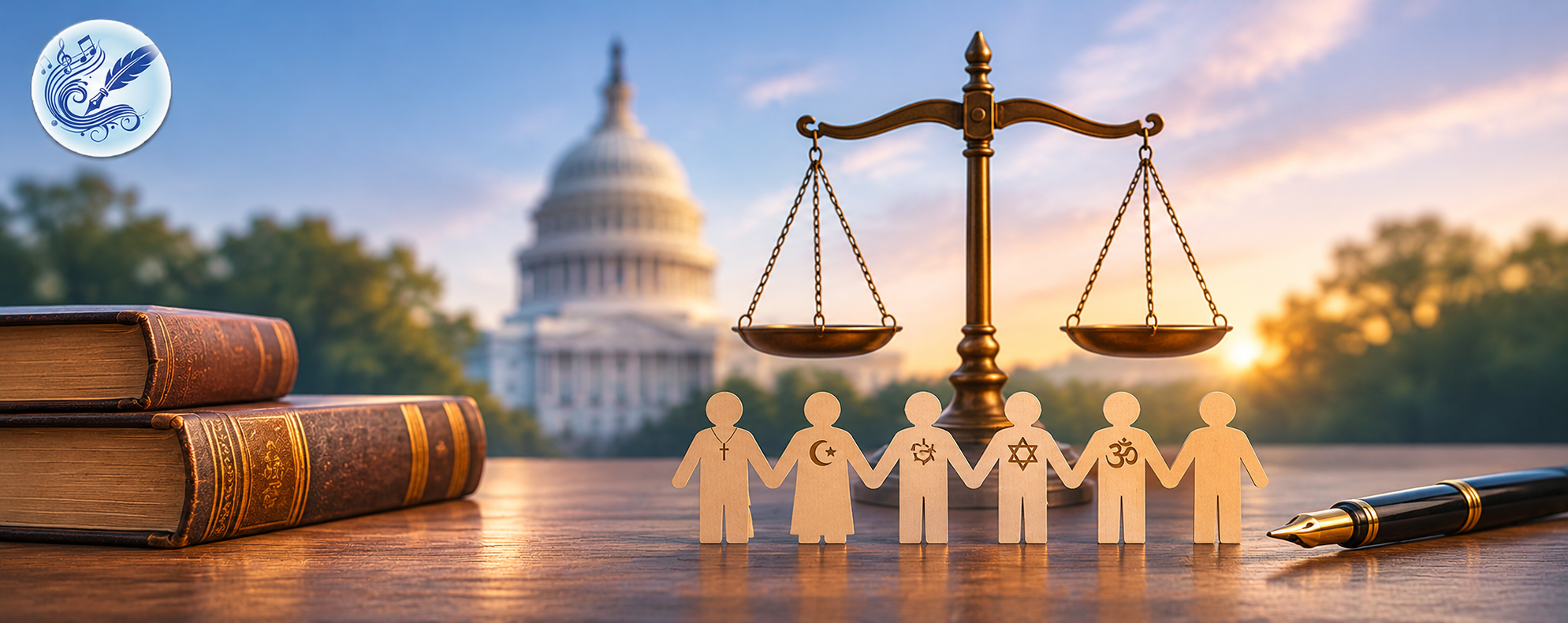
I believe in a Universal Creator, what some might call God. That conviction matters to how I think about human dignity and what we owe one another. However, I am not so confident in my own cognitive insight to allow me to cast aspersions on someone else faith. Far be it from me to draw someone else away from his or her faith; what if I’m the one who is mistaken? Thia also makes me wary of asking the government to settle questions of faith for everyone. I want to be able to speak openly about what I believe and to live alongside people who can do the same, including those who believe differently or follow no religion.
Michael W. McConnell’s essay “The Role of Religion in the American Revolution” offers a historical reason to value that freedom. He takes up Edmund Burke’s question of why colonists who already enjoyed considerable self-government would risk so much to break with Britain. Part of McConnell’s answer lies in the experience of dissenting Protestants. Their encounters with persecution, their preaching, and their habits of governing their own churches gave them reasons and ways to resist arbitrary authority.
What the churches taught about authority
McConnell is especially persuasive when he shows how churches taught politics through their everyday practices. Congregationalists ran their own congregations, in a pattern that resembled the New England town meeting. Presbyterians elected elders and sent delegates to higher bodies, a structure McConnell compares to federal government. Baptists stressed personal conscience and voluntary faith. Anglican clergy, whose vows tied them to the Crown, more often remained loyal, with Virginia a notable exception. These were tendencies, and local circumstances mattered.
The essay’s most interesting point for me is its comparison of religious disestablishment with freedom of the press. Sermons helped shape public opinion and circulated in print. Ending official church privilege reduced the government’s influence over one of the principal forums for public debate. It also made it easier for people with competing beliefs to speak and organize on equal terms. That is the neutrality McConnell highlights in Douglas Laycock’s work, and it is the kind of neutrality I value.
One standard for every faith
I apply that principle to proposals by Islamist political movements to make a particular interpretation of Sharia binding civil law. Muslims understand and practice Sharia in diverse ways. A Muslim who takes religious guidance from it in daily life exercises the freedom of conscience I claim for myself. A political proposal to enforce a religious interpretation through the state raises a different question. Would citizens who understand their faith differently, follow another religion, or profess none still stand as equals under the law?
I would ask the same question of a proposal to give one interpretation of Christianity the force of civil law. My own belief in God can inform the laws I favor. In a shared republic, I owe my neighbors reasons they can consider without first accepting my beliefs. They owe me the same consideration. We can argue about whether a law protects people or serves a public need while each bringing our convictions to the discussion.
Pluralism gives a majority good reason to protect freedoms it may someday need as a minority. It also gives dissenters within a faith room to challenge their own leaders, and it gives all of us a chance to learn from people who see things differently. McConnell’s account reminds me how much a country can gain when people are free to bring their deepest convictions into public life. I want that freedom for my neighbors for the same reason I want it for myself.
You can also explore how our ideas shape society and influence the world around us. Discover Why Ideas Have Consequences
Further reading
Michael W. McConnell, “The Role of Religion in the American Revolution”, Journal of Law and Religion 40, no. 2, pp. 205–216. The issue is dated May 2025. The article appeared online April 6, 2026.
Harvard Law School Program in Islamic Law, discussion of Ihsan Yilmaz’s research on Sharia in everyday life.