
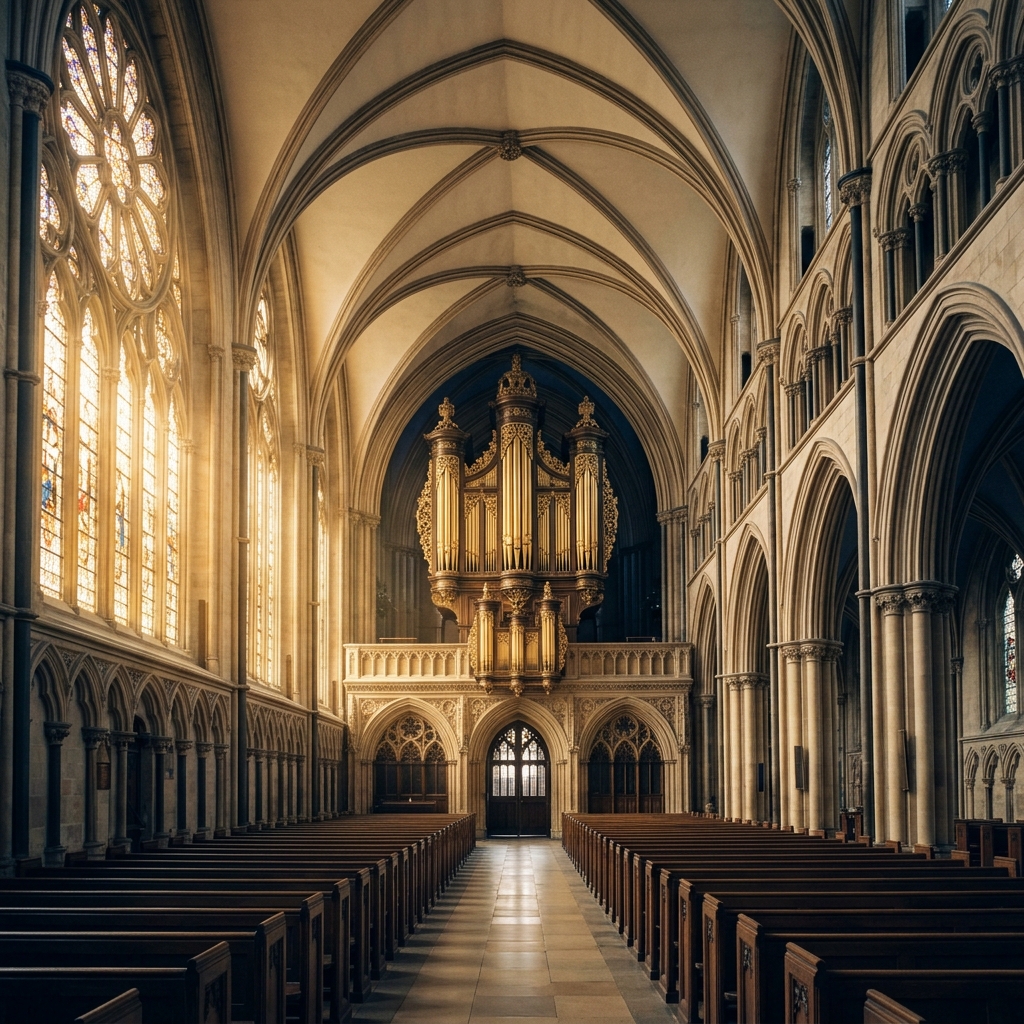
While reading my email this morning I accidentally came across Pau NG’s channel posting of Carvalho’s Laudate Pueri Dominum on YouTube. From the first sound, my attention was fully diverted from reading to listening.
Among the many sacred texts set by composers across the centuries, Psalm 113 occupies a distinctive place. Its language of praise, majesty, and humility has inspired settings ranging from austere liturgical counterpoint to deeply lyrical Romantic devotion.
My morning auditory revelation — I had never heard João de Sousa Carvalho’s version before — prompted a mental return to two other particularly compelling interpretations: Wolfgang Amadeus Mozart and Felix Mendelssohn.
Hearing them along with Carvalho’s reveals not merely different musical styles, but three very different understandings of sacred expression itself.
Mozart: Sacred Architecture
Mozart’s work forms part of the magnificent Vesperae solennes de confessore, composed in Salzburg in 1780. The work reflects the ceremonial grandeur of the late eighteenth-century Catholic liturgy.
From the opening measures, one hears disciplined contrapuntal motion and formal balance. The voices interweave with precision, and the orchestra drives the movement forward with restrained energy. This is praise rendered through order.
The emotional effect is not sentimental nor overly dramatic. Instead, the music projects dignity, authority, and liturgical confidence. Here Mozart’s sacred style combines learned counterpoint inherited from older church traditions with Classical transparency and proportionality.
Mozart treats the psalm architecturally as a cathedral in sound: carefully proportioned, elevated, and enduring.
Mendelssohn: Sacred Contemplation
Mendelssohn’s setting, part of the Drei Motetten, Op. 39, belongs to a very different spiritual and musical world. Written in 1830 for women’s voices and organ after Mendelssohn visited the convent church of Trinità dei Monti in Rome, the work reflects early Romantic sacred introspection.
Compared with Mozart, Mendelssohn’s music feels more intimate and inward. The SSA voicing produces an ethereal transparency that seems almost suspended in air.
Where Mozart emphasizes structure, Mendelssohn emphasizes atmosphere. Several features stand out: longer lyrical lines, gentler harmonic motion, and warmer Romantic color. The second section, an Adagio, becomes almost prayer-like in character. One senses not ceremonial proclamation but contemplative devotion. This is praise rendered through beauty and tenderness.
If Mozart’s setting resembles a cathedral, Mendelssohn’s resembles candlelight in a chapel.
João de Sousa Carvalho: Sacred Drama
Far less known today, and admittedly new to the author, João de Sousa Carvalho was one of the foremost Portuguese composers of the late eighteenth century. Educated in Naples and heavily influenced by the Italian sacred and operatic traditions, Carvalho developed a style that blended liturgical seriousness with theatrical expressiveness.
Carvalho’s setting immediately distinguishes itself from Mozart through its vocal character. The melodic lines are broader, more overtly expressive, and unmistakably Italianate. One hears the influence of opera.
Yet this should not be mistaken for superficial theatricality. Carvalho possessed formidable contrapuntal training, and beneath the lyricism lies substantial compositional control. His sacred music inhabits an intriguing stylistic space: formally grounded, but emotionally expansive.
Three Composers, Three Sacred Languages
Placed side-by-side, the three settings reveal a remarkable evolution in sacred musical thought. Each setting succeeds on its own terms.
Mozart gives us grandeur disciplined by reason. Mendelssohn gives us reverence illuminated by Romantic warmth. Carvalho gives us sacred music alive with Mediterranean vitality and operatic color.
Together, they demonstrate how a single sacred text can become radically different musical experiences across eras, nations, and theological sensibilities.